
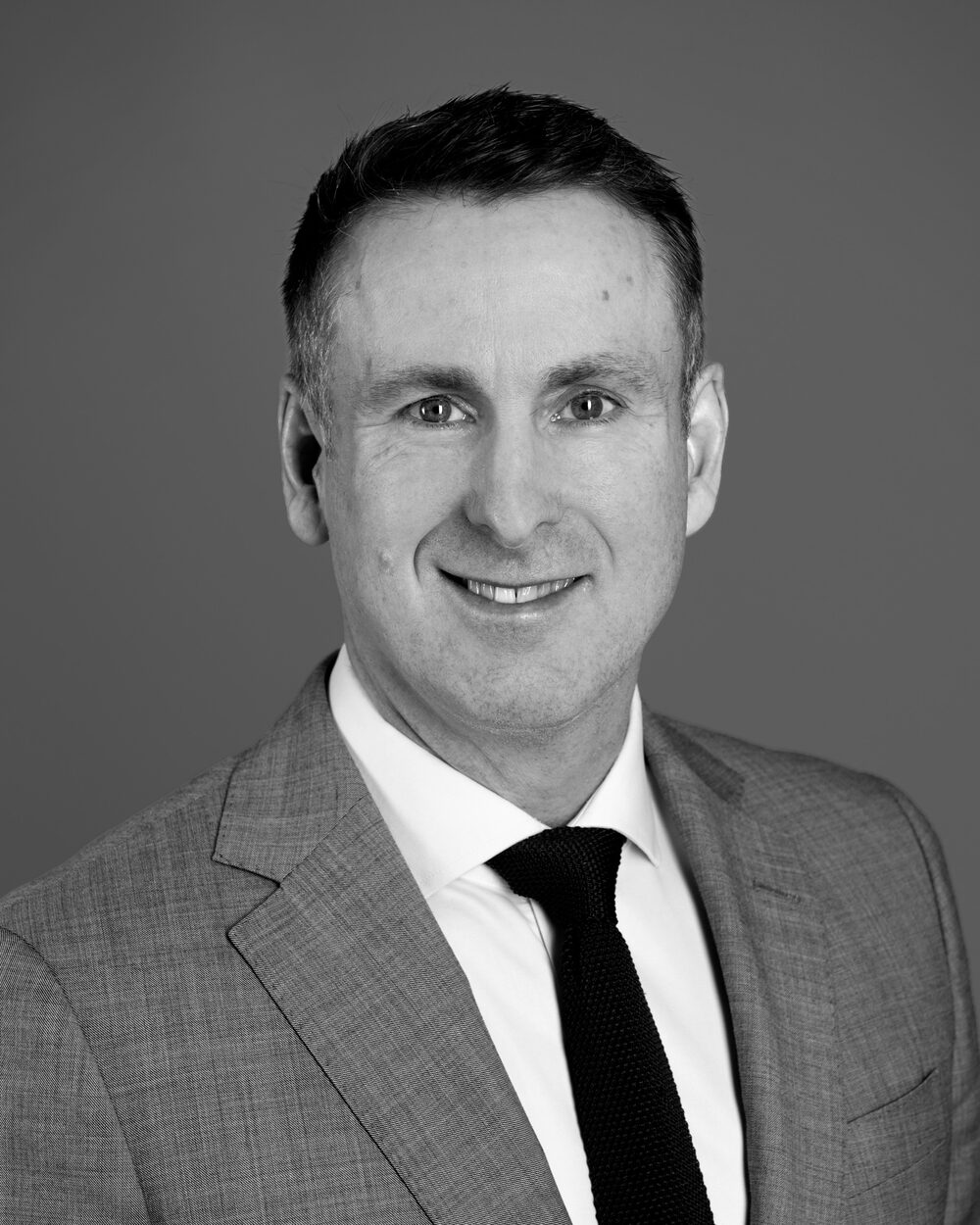
About Seán Rafter
I have worked in four industries. Automotive engineering in England, a mobile telecoms provider in Zürich, humanitarian operations across more than thirty countries, and now philanthropy, at a foundation that runs its own programs. The work never changed. I connect with people, and I build the systems and the culture that let them reach their potential.
I run HELP Logistics, a program of the Kühne Foundation, and have held the role since 2015. Forty-one people across six offices, Singapore to Senegal. The work is advisory and training for governments, UN agencies and NGOs across four continents, on how humanitarian supply chains are designed and run. I am responsible for the strategic global agreements and partnerships behind it. I am also Operations Director of CHORD, the Center for Humanitarian Logistics and Regional Development, run jointly by Kühne Logistics University and HELP to bridge humanitarian practice and academia.
That was not the starting position. The early appointments were international. As each office found its feet those people moved on, and the directors who took over had come up through HELP. Several had never worked in the sector before they joined it.
It is a personal philosophy, and I held every regional lead to it until it was simply how we hired.
Most of what I work on comes back to the question underneath that. Who is actually allowed to decide?
The humanitarian sector has spent a decade committing to localization, the transfer of decision authority and funding to organizations in the countries where the work happens. Progress has been thin. The usual explanation is capacity, that local organizations are not ready yet. I think that explanation is wrong, and I have five regions that say so.
So for my MBA thesis at KLU I went and tested it properly, interviewing sixteen people across international NGOs, UN agencies, donor bodies and local organizations. Decision authority stays concentrated in global positions. Local actors carry the operational responsibility without the formal authority, visibility or legitimacy that should come with it. Compliance systems, built to manage fiduciary risk, harden that arrangement rather than loosen it. Responsibility without authority. I called the framework that describes it Pathways and Power.
None of that is confined to aid. Any organization that has asked a team to own an outcome while keeping the decisions upstairs is running the same structure.
I came to this work late and from an odd direction. I trained as a mechanical engineer, spent five years at Ricardo working on engine noise and vibration for clients including GM, Ferrari and Rolls-Royce, then ran a 24/7 IT operations team for a Swiss telecom company.
Good salary, weekends in the mountains, a promotion on the table. Everyone around me said I would be crazy not to take it. I spent weeks trying to reason my way to a decision and got nowhere, so I did the thing I had been avoiding and asked for help. It stopped being about the job almost immediately. One question kept coming back. Who am I responsible for? My boss. My parents. The version of me that never takes a risk.
I was not stuck because I did not know what to do. I was stuck because I was afraid of who I would disappoint.
I went to my boss's office the next morning. He congratulated me and offered me the job. I thanked him for his faith in me and resigned.
Two months later I was on a flight to the Democratic Republic of Congo, terrified. Over the next year I helped a community build a school, a health clinic and a clean water supply, and learned karate from our security guard, who turned out to be a black belt and the local parish priest.
Two years on Save the Children's emergency roster followed, deployed to Kenya, Somalia, Pakistan, Ivory Coast, North Korea, Nigeria and Libya, then regional responsibility for logistics across fifteen country offices in Asia. The story of the decision is in the talk.
What I write about now comes out of that. Decision quality under constraint is scarcer than funding. Organizations optimize for the appearance of order over clarity of action. Authority moves when someone gives it up, not when a policy announces it.
I am Irish and I live in Switzerland.
I have had a camera since I was ten and I take photographs mostly for my own pleasure. People and places, black and white and colour, at seanrafterphotography.com.